How to Make an Herbal Poultice for Joint Pain: Step-by-Step Guide
Joint pain can make everyday activities feel challenging, whether it stems from arthritis, overuse injuries, muscle strains, or age-related wear and tear. While conventional treatments can be effective, many people also seek natural remedies to complement their pain management routine.
One traditional remedy that has stood the test of time is the herbal poultice. Used for centuries across many cultures, poultices deliver the healing properties of herbs directly to the affected area.
In this guide, you’ll learn exactly how to make an herbal poultice for joint pain using both fresh and dried herbs, along with safety precautions, troubleshooting tips, and customized recipes for different types of discomfort.
What Is a Herbal Poultice and How Does It Work for Joint Pain?
A herbal poultice is a soft, moist mixture of herbs applied directly to the skin and covered with cloth or gauze. Traditionally, poultices were used to reduce inflammation, draw out toxins, soothe pain, and promote healing.
How Poultices Work
When herbs are crushed and exposed to moisture and heat, their active compounds are released.
Applying this herbal mixture directly over a painful joint may help:
- Increase local circulation
- Reduce inflammation
- Relax the surrounding muscles
- Deliver beneficial plant compounds through the skin
- Provide soothing heat and moisture
Poultice vs. Compress vs. Salve
| Method | Description | Best For |
| Poultice | Moist herbal paste applied directly to skin | Deep localized pain and inflammation |
| Compress | Cloth soaked in herbal liquid | Quick applications and sensitive skin |
| Salve | Herbal-infused oil mixed with wax | Long-term daily use |
Why Poultices Are Effective for Joint Pain
Unlike capsules or teas that work systemically, poultices target a specific area. The combination of warmth, moisture, and herbal compounds creates a concentrated treatment directly at the site of discomfort.
Best Herbs for Joint Pain Poultices and Their Healing Properties
Choosing the right herbs is one of the most important aspects of creating an effective poultice.
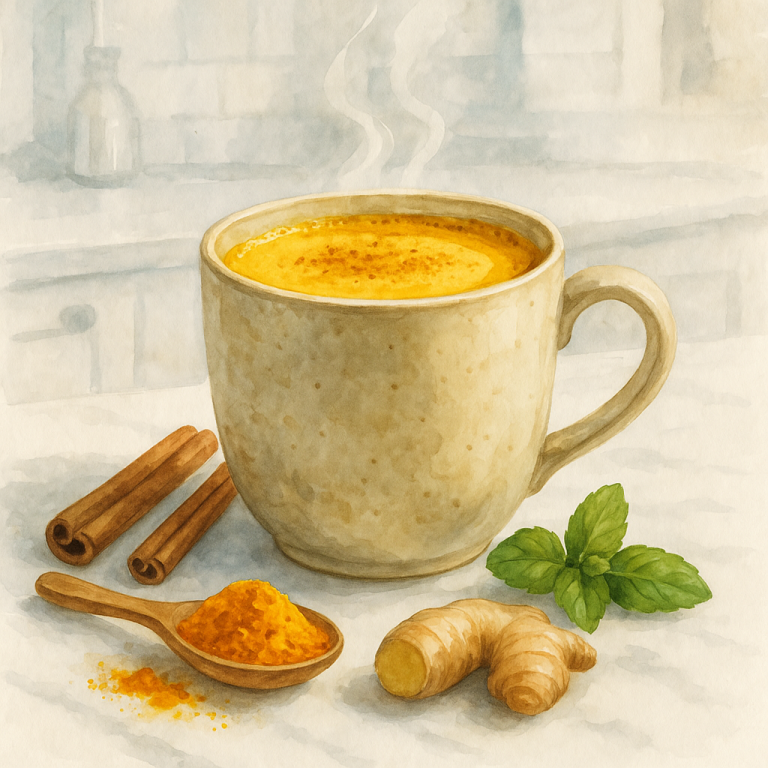
Turmeric
Turmeric contains curcumin, known for its anti-inflammatory properties.
Best for:
- Osteoarthritis
- Chronic inflammation
- Stiff joints
Ginger
Ginger creates a warming sensation that improves circulation.
Best for:
- Cold, stiff joints
- Muscle-related joint pain
- Chronic aches
Arnica
Arnica is widely used topically for pain and bruising.
Best for:
- Sprains
- Overuse injuries
- Post-exercise soreness
Note: Arnica should not be applied to broken skin.
Comfrey
Often called “knitbone,” comfrey has a long history of use for tissue support.
Best for:
- Mild sprains
- Joint inflammation
- Recovery support
Cayenne Pepper
Capsaicin, the active component in cayenne, may help interrupt pain signals.
Best for:
- Chronic pain
- Arthritis discomfort
Plantain Leaf
Plantain is known for its soothing and anti-inflammatory properties.
Best for:
- Swollen joints
- Minor injuries
- Skin-sensitive individuals
Willow Bark
Willow bark contains natural salicylates.
Best for:
- Arthritis pain
- General inflammation
Matching Herbs to Joint Conditions
| Condition | Recommended Herbs |
| Osteoarthritis | Turmeric, ginger, willow bark |
| Rheumatoid arthritis | Turmeric, plantain, ginger |
| Sprains | Arnica, comfrey |
| Muscle strain | Ginger, cayenne |
| Swelling | Plantain, turmeric |
Essential Supplies and Ingredients Needed to Make a Poultice
Before beginning, gather your materials.
Fresh Herbs vs. Dried Herbs
Fresh Herbs
Pros
- Maximum moisture content
- Potent aroma and active compounds
- Easy to grow at home
Cons
- Short shelf life
- Seasonal availability
Dried Herbs
Pros
- Long storage life
- Available year-round
- Convenient
Cons
- Require rehydration
- Slightly less aromatic
Basic Ingredients
- Fresh or dried herbs
- Water
- Small bowl
- Mortar and pestle or food processor
- Gauze, muslin cloth, or cotton cloth
- Bandage or wrap
Optional Ingredients
- Apple cider vinegar
- Olive oil
- Coconut oil
- Flaxseed meal
- Bentonite clay
- Essential oils
Sourcing Quality Herbs
Consider:
- Growing medicinal herbs at home
- Purchasing from reputable herbal suppliers
- Buying certified organic herbs when possible
Avoid harvesting wild plants unless you are confident in plant identification.
Storage Considerations
- Store dried herbs in airtight containers.
- Keep away from sunlight and moisture.
- Replace herbs annually for maximum potency.
Step-by-Step Instructions: Making a Fresh Herb Poultice
Fresh herbs create one of the most potent forms of herbal poultice.
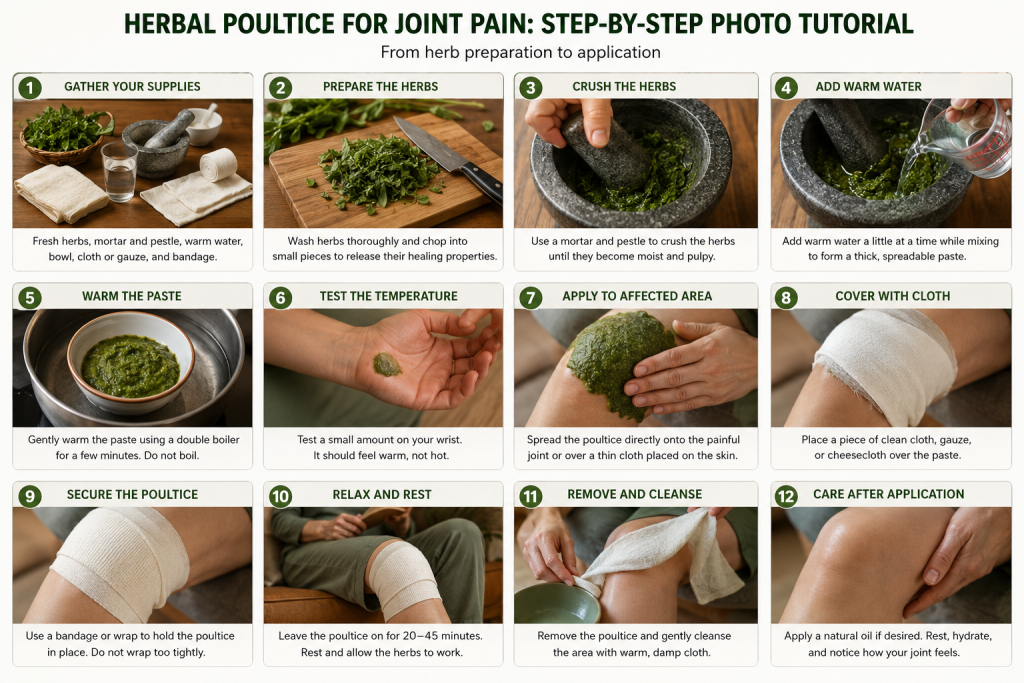
Step 1: Prepare Your Herbs
Wash herbs thoroughly.
Chop finely to increase surface area.
Use approximately:
- 1 cup fresh herbs
- 2–4 tablespoons water
Step 2: Create the Herbal Paste
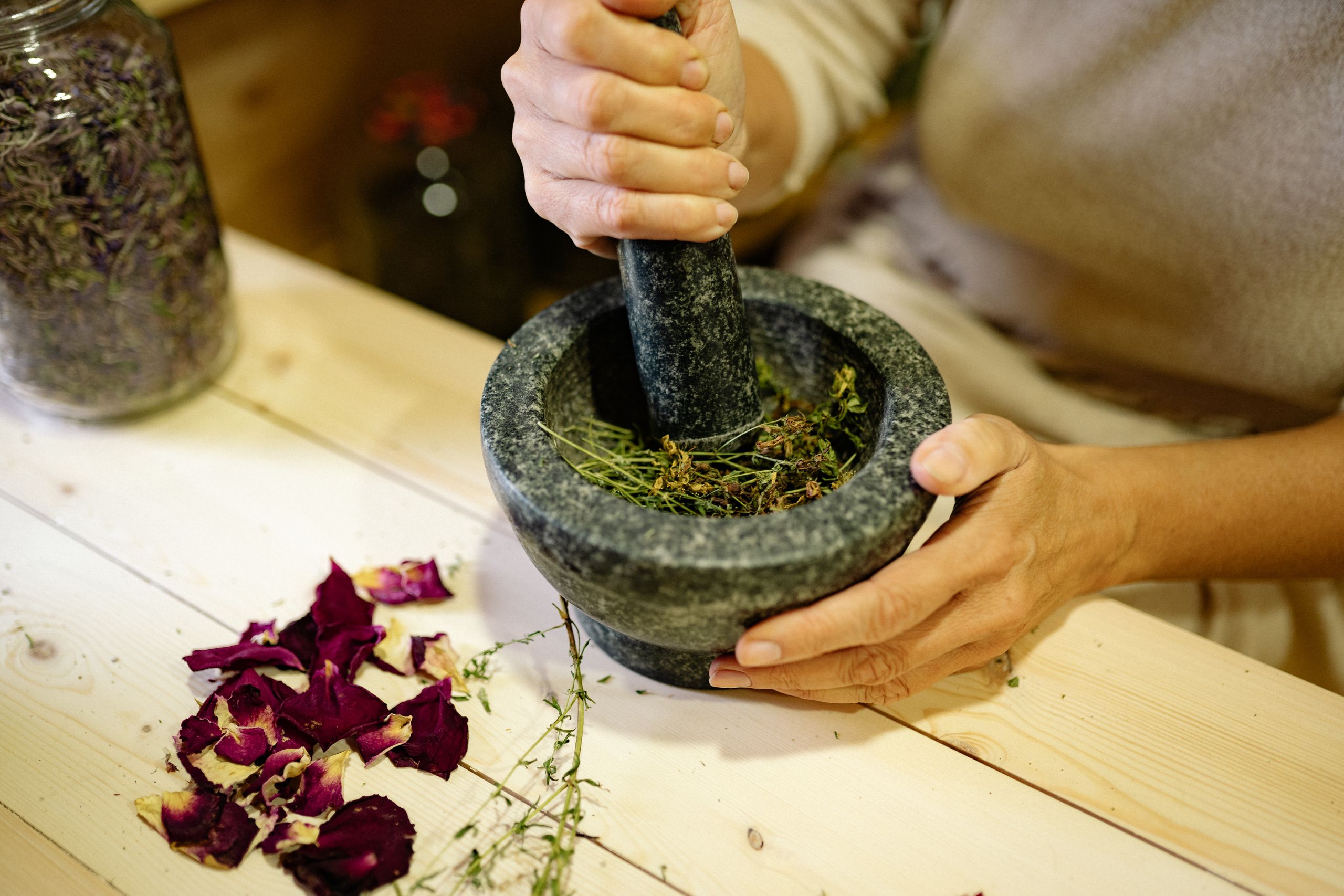
Using a mortar and pestle:
- Crush herbs until pulpy.
- Slowly add water.
- Continue mixing until a thick paste forms.
The consistency should resemble oatmeal.
Step 3: Warm the Mixture
Place the herbal mixture in a heat-safe bowl.
Warm gently using:
- Double boiler
- Warm water bath
Avoid boiling, which can degrade beneficial compounds.
Step 4: Test the Temperature
Apply a small amount to your wrist.
The poultice should feel comfortably warm—not hot.
Step 5: Apply to the Joint
Spread the paste:
- Directly on the skin or
- On a cloth first
Cover the entire painful area.
Step 6: Secure the Poultice
Wrap loosely using:
- Cotton cloth
- Gauze
- Elastic bandage
Do not wrap too tightly.
Step 7: Leave in Place
Allow the poultice to remain for:
- 20–45 minutes
Remove immediately if irritation develops.
Troubleshooting Common Problems
Too Wet
Add:
- More herbs
- Flaxseed meal
- Clay
Too Dry
Add:
- Warm water
- Herbal tea
Skin Irritation
Remove immediately and wash skin.
Try milder herbs next time.
Step-by-Step Instructions: Making a Dried Herb Poultice
Dried herbs offer convenience and year-round accessibility.
Step 1: Measure Your Herbs
Use:
- ½ cup dried herbs
- ½ to ¾ cup hot water
Step 2: Rehydrate
Pour hot water over herbs.
Allow soaking for 10–15 minutes.
Step 3: Create a Paste
Mix thoroughly.
If needed, add:
- Flaxseed meal
- Whole wheat flour
- Bentonite clay
These improve texture and adhesion.
Step 4: Warm or Cool as Needed
Warm Poultices
Best for:
- Stiffness
- Chronic arthritis
Cool Poultices
Best for:
- Acute injuries
- Swelling
- Recent sprains
Step 5: Apply and Wrap
Follow the same procedure used for fresh herb poultices.
Advantages of Dried Herb Poultices
- Easier storage
- Less preparation time
- Consistent availability
- Ideal for emergency herbal kits
Sample Arthritis Recipe
Ingredients:
- 2 tablespoons turmeric
- 1 tablespoon ginger
- 1 tablespoon flaxseed meal
- Hot water
Mix into a thick paste and apply warm for 30 minutes.
Safety Precautions and When to Avoid Using Poultices
Natural remedies can be helpful, but safety should always come first.
Perform a Patch Test
Before full use:
- Apply a small amount to the forearm.
- Wait 24 hours.
- Check for redness or irritation.
Avoid Poultices If You Have
- Open wounds
- Broken skin
- Active infections
- Severe burns
Pregnancy Considerations
Some herbs may not be appropriate during pregnancy.
Examples include:
- Arnica
- Comfrey
- Large amounts of willow bark
Consult a healthcare professional before use.
Medication Interactions
Use caution if taking:
- Blood thinners
- Anti-inflammatory medications
- Prescription pain medications
Signs of an Adverse Reaction
Remove immediately if you experience:
- Burning
- Severe redness
- Rash
- Swelling
- Difficulty breathing
When to Seek Medical Care
Consult a healthcare provider if:
- Joint pain is severe
- Symptoms worsen
- Swelling is significant
- Fever is present
- Mobility is greatly reduced
Proper Disposal
Discard used poultices after each application.
Never reuse herbal material due to the risk of contamination.
Maximizing Effectiveness: Tips for Best Results
Apply at the Right Time
Many people experience the best results:
- Before bedtime
- After physical activity
- During arthritis flare-ups
Combine With Other Natural Therapies
Consider pairing poultices with:
- Gentle stretching
- Massage
- Warm baths
- Herbal teas
Frequency of Use
Acute Pain
1–2 times daily for several days.
Chronic Pain
3–5 times weekly as needed.
Maintain Warmth
To keep a poultice warm:
- Wrap with a towel
- Use a heating pad on a low setting
- Use an insulated herbal wrap
Support Healing Internally
Lifestyle factors matter.
Focus on:
- Hydration
- Anti-inflammatory foods
- Quality sleep
- Regular movement
Track Your Results
Keep a journal noting:
- Herbs used
- Application duration
- Pain levels before and after
- Any side effects
Over time, you’ll identify which combinations work best for your body.
Our Conclusion
Learning how to make an herbal poultice for joint pain gives you a simple, affordable, and customizable tool for natural pain management. Whether you choose fresh herbs from your garden or convenient dried herbs from your pantry, poultices can provide targeted support for inflammation, stiffness, and discomfort.
Start with gentle herbs such as turmeric, ginger, or plantain, follow proper safety precautions, and track your results to discover what works best for your specific needs. While poultices are not a cure for underlying joint conditions, they can be a valuable addition to a comprehensive wellness routine.
Want more natural pain relief solutions? Download our free printable herbal poultice recipe card and join our newsletter for weekly herbal wellness tips and home remedy guides.
Frequently Asked Questions
How to make a poultice for arthritis?
Combine anti-inflammatory herbs such as turmeric and ginger with warm water to create a thick paste. Apply directly to the affected joint, cover with a cloth, and leave on for 20–45 minutes.
What is a good herb for joint pain?
Turmeric is one of the most popular herbs for joint pain because of its anti-inflammatory properties. Ginger, willow bark, and arnica are also commonly used.
What is the best poultice for inflammation?
A turmeric and ginger poultice is often considered one of the most effective options for inflammation due to its warming and anti-inflammatory effects.
What is the most powerful natural anti-inflammatory herb?
Turmeric is widely regarded as one of the strongest natural anti-inflammatory herbs because of its active compound, curcumin.
How long should you leave a poultice on?
Most herbal poultices should remain on the skin for 20–45 minutes. Always remove sooner if irritation occurs.
Can you reuse a herbal poultice?
No. Used poultices should be discarded after one application to prevent bacterial contamination and reduced effectiveness.
Do poultices actually work for pain relief?
Many people report temporary relief from pain, stiffness, and inflammation when using herbal poultices. Results vary depending on the individual, condition, and herbs used.
What is the difference between a poultice and a compress?
A poultice uses crushed herbs applied directly to the skin, while a compress uses a cloth soaked in herbal liquid. Poultices typically provide more concentrated contact with herbal material.